


Understanding Cardiogen: Benefits, Dosage & Uses
The cardiogen peptide is a short synthetic peptide bioregulator from the Khavinson research tradition, studied as a heart bioregulator for the cardiovascular system. This guide explains what Cardiogen is, how it is thought to work at the cellular level, its reported benefits, dosage and cycling, safety, and how to find Cardiogen for sale responsibly — one of the more discussed peptides for heart health.
Editorial & research disclaimer: This article is for educational purposes only and is not medical advice. Cardiogen is a peptide bioregulator and has not been evaluated by the FDA to diagnose, treat, cure, or prevent any disease, including any heart condition, chronic heart failure, or heart failure. Always consult a licensed healthcare professional (ideally a cardiologist) and verify local regulations before using any peptide, especially if managing conditions like chronic heart failure.

Quick Answer
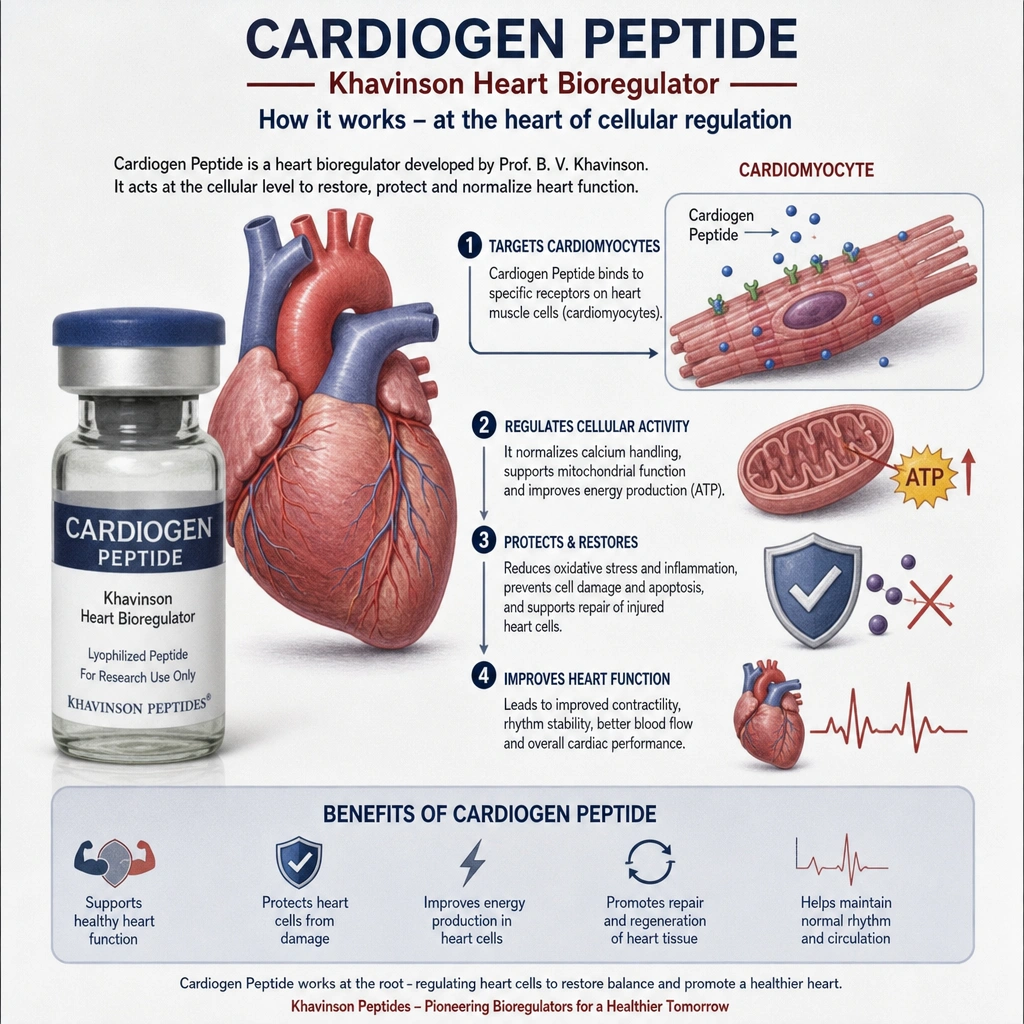
What is Cardiogen peptide? Cardiogen is a synthetic short-chain peptide bioregulator — commonly described as the sequence Ala-Glu-Asp-Arg (AEDR) — designed to target the cardiovascular system. In the Khavinson model it acts as an epigenetic signal, entering cardiomyocytes (heart muscle cells or myocardial cells) and prompting the protein synthesis of elastin used for cellular tissue repair, cardiomyocyte proliferation, CXCL12 and WEDC1 expression, and the regulation of apoptosis or programmed cell death by inhibiting endonuclease-catalyzed DNA hydrolysis.
It is sold as oral capsules, sublingual drops, or an injectable research form, and is used in short cycles. Evidence is largely preclinical, including studies on M-1 sarcoma models involving hemorrhagic necrosis and from its originating research school, so treat Cardiogen as an educational, research-grade compound rather than an approved medicine. Note: it is unrelated to "Cardiogen 82," a radioactive isotope generator used in PET imaging.
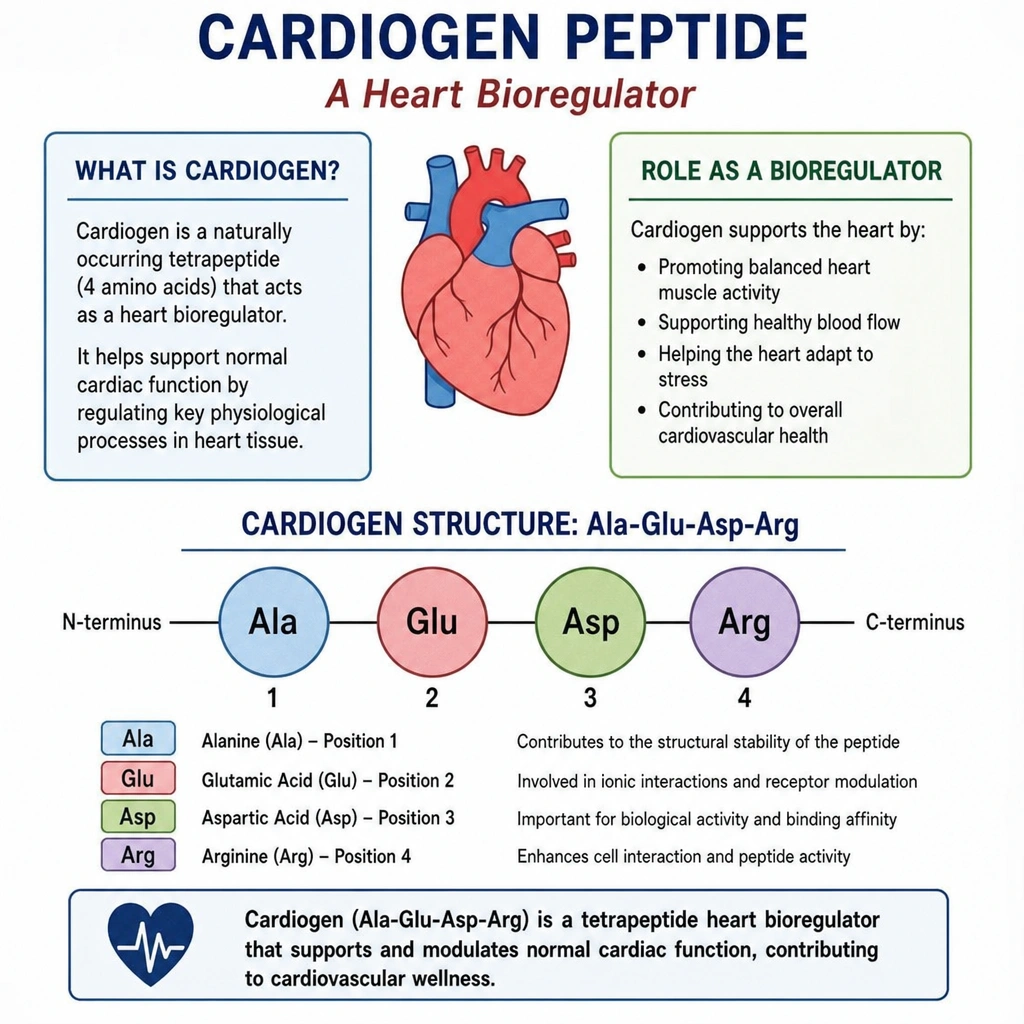
Cardiogen is a Khavinson-class heart bioregulator — a synthetic tetrapeptide (Ala-Glu-Asp-Arg) studied as a bioregulator of cardiovascular function for cardioprotective support, not an approved drug.
Mechanism is epigenetic by hypothesis: it is proposed to enter cardiomyocytes and upregulate repair-related protein synthesis.
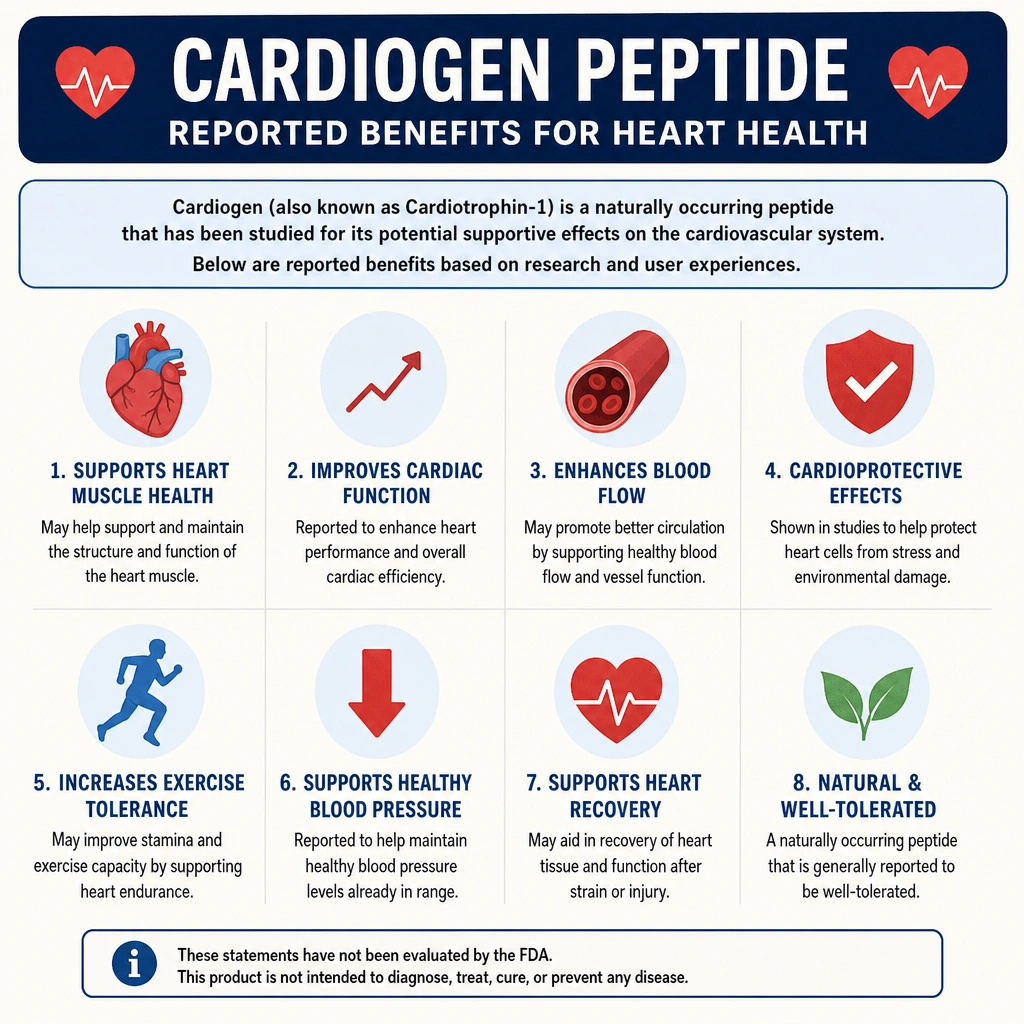
Reported cardiogen peptide benefits include support for heart function and left-ventricular performance, cardiovascular-aging prevention, microcirculation, and cellular metabolism — mostly from preclinical and originating-school data.
Cardiogen peptide dosage is typically 1-2 capsules (≈100-200 mcg) daily, or 1-2 mg injectable, in 10-30 day cycles run 2-3 times per year.
Buy on proof. Choose Cardiogen from suppliers with third-party COAs, or work through a licensed clinician; confirm legality in your region.
What Is Cardiogen? (and What It Isn't)
The cardiogen peptide is a synthetically produced, short-chain peptide bioregulator designed to target and support the cardiovascular system. As a heart bioregulator, it belongs to the family of Khavinson bioregulators — short peptides that are small enough to penetrate cell membranes and interact with DNA. It is often sold as a "Cardiogen 20mg" peptide complex in capsule form.
Cardiogen Peptide Structure and Sequence
In terms of cardiogen peptide structure and sequence, it is commonly described as the tetrapeptide H-Ala-Glu-Asp-Arg-OH (AEDR) — a compound with a low molecular weight consisting of alanine, glutamic acid, aspartic acid, and arginine. Because reported sequences can differ across suppliers, confirm the exact sequence on the product documentation.
Cardiogen Peptide vs. Cardiogen 82
An important disambiguation: the cardiogen peptide is not the same as "Cardiogen 82," which is a brand name for a Rubidium Rb-82 generator — a radioactive isotope generator used in clinical cardiac PET scans. This article is exclusively about the bioregulatory peptide (sometimes searched as "peptide cardiogen" or "cardiogen bioregulator peptide").
Related searches this guide answers: what is cardiogen peptide used for, what does cardiogen peptide do, cardiogen supplement or peptide or drug, cardiogen peptide what is cardiogen peptide, cardiogen peptide cardiogen what is cardiogen, cardiogen 20mg bioregulator peptide, cardiogen 20mg peptide bioregulator, cardiogen peptide bioregulator cardiogen 20mg, cardiogen peptide khavinson, cardiogen peptides, cardiogen peptide structure sequence, cardiogen peptide capsules, cardiogen peptide dosing, cardiogen peptide dosage per day, cardiogen peptide injection dosage, cardiogen peptide buy, cardiogen peptide benefits reddit, and the cardiogen peptide bioregulator heart connection.
How Does the Cardiogen Peptide Work?
Traditional heart medications typically alter systemic functions — thinning the blood, dilating vessels, or slowing the heart — without healing the underlying tissue. The cardiogen peptide bioregulator for the heart is proposed to work differently. Cardiomyocytes (the heart's muscle cells) have a famously low rate of regeneration, so when they are damaged they do not easily replace themselves.
According to the Khavinson model, According to the Khavinson model, Cardiogen is proposed to penetrate the nucleus of these heart cells and fibroblasts of the prostate gland to interact with DNA and influence p53 protein expression, Lamin A, and other protein expression, signaling the cell to begin synthesizing specific structural and functional cytoskeletal proteins like actin, tubulin, vimentin, elastin, and collagen. In short, it is hypothesized to "remind" aging or stressed cardiomyocytes and cardiac progenitor cells how to behave like younger, healthier cells by influencing nuclear matrix proteins like Lamin C — the cornerstone idea behind tissue regeneration, cellular resilience, cellular repair, and cardiac repair in heart tissue. These are mechanistic, largely preclinical observations, not proven human outcomes.
Cardiogen Peptide Benefits
Because of its targeted nature, the reported cardiogen peptide benefits center on the heart muscle and its supply. Bioregulator literature and user reports highlight the following, with the caveat that most evidence is preclinical and from its originating research school:
- Myocardial endurance and left-ventricular function: proposed to support the overall cardiac function, cardiac output, contractility, and efficiency of the heart's main pumping chamber.
- Cardiovascular-aging prevention: proposed to help keep cardiac tissue pliable and resilient by supporting age-declining protein synthesis, enhancing cellular resilience, and slowing cellular aging.
- Microcirculation support: discussed as supporting the vascular endothelium, endothelial function, angiogenesis, and capillary supply within the heart muscle while potentially mitigating vascular inflammation.
- Cellular metabolism: proposed to help cardiomyocytes with metabolic regulation and mitochondrial function to use oxygen and nutrients efficiently for steady ATP production.
The honest limitation: there are no large independent randomized human trials establishing efficacy for the cardiogen peptide. Treat strong disease claims as marketing, and never use it as a substitute for emergency care or prescribed cardiac medication.
Clinical Contexts: Recovery, Strain & Hypertension
Discussion of Cardiogen tends to focus on three high-stress scenarios, including its potential role in supporting tissue health during ischemia, metabolic syndrome, and ischemic heart disease. In each, it is framed as complementary support, not a standalone treatment:
- Myocardial-infarction recovery: it cannot revive dead tissue, but it is proposed to support the surviving "border zone" cells around a scar during recovery protocols to potentially mitigate excessive scar formation.
- Athletic heart strain: endurance athletes explore peptide therapy to support cellular recovery between hard sessions and reduce maladaptive cardiac remodeling or hypertrophy from overtraining.
- Hypertension support: Cardiogen does not lower blood pressure like a drug; the idea is to strengthen the cardiac muscle and support overall cardiovascular health so the heart handles workload with less stress.
Peptide Bioregulation vs. Cardiovascular Drugs
The point of comparing peptide bioregulation with cardiovascular drugs used for cardiovascular diseases is not to replace medicine but to understand distinct roles. Drugs save lives in emergencies; bioregulators are proposed to support long-term tissue health.
| Factor | Cardiogen (Bioregulator) | Cardiovascular Drugs |
|---|---|---|
| Mechanism | Proposed DNA signaling in cardiomyocytes | Receptor/systemic modulation |
| Focus | Root-cause tissue support (hypothesized) | Symptom control, acute events |
| Onset | Gradual (healing is a process) | Fast-acting |
| Emergency use | Not for acute events | Life-saving in emergencies |
| Status | Research/educational compound | Approved medications |
Cardiogen Peptide Dosage and Administration
Because Cardiogen is not an approved medicine, there is no official human dose. The cardiogen peptide dosage figures below (covering cardiogen dosage, dosage per day, and injection dosage) come from research and user protocols and should be treated as research parameters only.
- Choose the format — oral capsules, sublingual drops, or subcutaneous injection; short-chain peptides survive digestion, so capsules remain popular.
- Oral dose — typically 1-2 capsules (≈100-200 mcg of active peptide) per day, taken with meals.
- Injectable dose — reported at 1-2 mg subcutaneously once daily or every other day.
- Cycle length — a typical cardiogen peptide protocol runs 10-30 days, not continuously.
- Frequency — for longevity, 20-30 day cycles two to three times per year; acute recovery may warrant more frequent cycles under a physician.
How to Strengthen Cardiac Muscle Naturally
Cardiogen is not a magic bullet. If you are wondering how to strengthen cardiac muscle naturally, pair it with the raw materials and habits the heart needs. Commonly discussed "best supplements for cardiac muscle repair" to stack include:
- CoQ10 / Ubiquinol — supports ATP production in heart-cell mitochondria.
- Magnesium (glycinate or taurate) — supports normal rhythm and vessel relaxation.
- Omega-3s (EPA/DHA) — support healthy inflammation and lipids.
- L-Carnitine — helps shuttle fatty acids into mitochondria for fuel.
- Zone 2 cardio, an anti-inflammatory diet, and stress management — the lifestyle foundation to combat oxidative stress and reactive oxygen species for any cardiovascular protocol.
Safety and Side Effects
Reports from its originating research tradition describe a favorable safety profile: as a peptide of naturally occurring amino acids, Cardiogen is said to be well tolerated, with excess metabolized harmlessly. Reported cardiogen peptide side effects are usually method-related — mild injection-site redness or itching with subcutaneous use, or rare digestive upset with oral capsules on an empty stomach. Independent human trial data remain limited, so read these reports as encouraging rather than definitive.
Use caution and professional supervision if you have active cancer, such as prostate cancer (peptides stimulate protein synthesis), are pregnant or nursing (insufficient data), or take complex cardiac medications — improved cardiac efficiency could eventually warrant prescription adjustments, so always coordinate with your cardiologist.
Where to Buy Cardiogen for Sale Safely
As peptide therapy grows, the terms "cardiogen for sale" and "buy cardiogen" flood health forums. The market is largely unregulated, so caution matters. Beyond cardiogen peptide reddit threads and cardiogen peptide reviews, buy on documentation.
| Factor | High-Quality (Verified) | Low-Quality / Risky |
|---|---|---|
| Testing / COA | Third-party Certificate of Analysis | Missing or generic |
| Sourcing | Clinician or reputable, transparent vendor | Anonymous, unverified |
| Labeling | States Ala-Glu-Asp-Arg composition | Vague ingredient list |
| Claims | Supportive, realistic | "Cure" or guaranteed results |
| Price | Reflects real synthesis cost | Suspiciously cheap (filler risk) |
When possible, work through a functional-medicine doctor or anti-aging clinic that can source verified material. You can use PrymaLab's bioregulator catalog as a reference point for the transparency standards a trustworthy supplier should meet.
Researching heart bioregulators? Start with verified material.
PrymaLab focuses on US-handled research peptides and research chemicals with transparent documentation and careful handling.
Explore PrymaLab BioregulatorsFrequently Asked Questions
What is Cardiogen peptide and what does it do?
Cardiogen is a synthetic short-chain peptide bioregulator (commonly Ala-Glu-Asp-Arg) that targets the cardiovascular system. In the Khavinson model it enters cardiomyocytes and signals DNA to drive repair-related protein synthesis. It is studied to support heart-muscle function and cardiovascular-aging prevention, and is used as an educational, research-grade compound rather than an approved medicine.
What are the main Cardiogen peptide benefits?
Reported cardiogen peptide benefits include support for left-ventricular function and myocardial endurance, cardiovascular-aging prevention, better microcirculation via a healthier endothelium, and more efficient cellular metabolism. It is one of the more discussed peptides for heart health. Evidence is largely preclinical, so treat strong disease claims cautiously and never replace prescribed care.
What is the typical Cardiogen peptide dosage?
Common educational guidelines suggest 1-2 capsules (about 100-200 mcg) daily with meals, or 1-2 mg subcutaneously once daily or every other day for the injectable form. Cycles usually last 10-30 days, run two to three times per year. These are research parameters, not medical directions, so consult a clinician first.
Is Cardiogen the same as Cardiogen 82?
No. The cardiogen peptide is a bioregulatory supplement made of amino acids. Cardiogen 82 is an unrelated brand name for a Rubidium Rb-82 generator used to produce a radioactive tracer for cardiac PET imaging. They share a similar name but serve completely different purposes.
Are there Cardiogen peptide side effects?
Reported cardiogen peptide side effects are usually method-related: mild injection-site redness or itching with subcutaneous use, or rare digestive upset with oral capsules. Its originating research tradition reports few systemic effects. Independent trials are limited, so people with active cancer, who are pregnant or nursing, or on complex cardiac drugs should seek medical supervision.
Where can I find Cardiogen for sale safely?
Look for cardiogen for sale from suppliers who provide third-party Certificates of Analysis and clear labeling of the Ala-Glu-Asp-Arg composition, and avoid cure-all claims or suspiciously low prices. When possible, buy through a functional-medicine doctor or clinic. Always confirm the legal status of the compound in your region before purchasing.
Is Cardiogen a Khavinson peptide?
Yes. The cardiogen khavinson peptide comes from the Russian research and bioregulator tradition associated with Professor Vladimir Khavinson and the St. Petersburg Institute of Bioregulation and Gerontology, which developed short, tissue-specific peptides — including this heart bioregulator — to support organ-specific repair.
References & Further Reading
- Khavinson, V.Kh. (2002). Peptides and Ageing. Neuroendocrinology Letters, 23(Suppl 3), 11–144.
- Khavinson, V.Kh., & Malinin, V.V. (2005). Gerontological Aspects of Genome Peptide Regulation. Karger, Basel.
- Anisimov, V.N., & Khavinson, V.Kh. (2010). Peptide bioregulation of aging: results and prospects. Biogerontology, 11(2), 139–149.
- Review literature on short peptide bioregulators and cardiomyocyte protein synthesis (Ala-Glu-Asp-Arg / AEDR-class peptides).
- U.S. Food and Drug Administration. Dietary Supplements: Questions and Answers. FDA.gov. Accessed 2026.
PrymaLab resources: Bioregulator peptides · Research Hub · Peptide calculator · FAQ.
Final disclaimer: This article is for educational purposes only. Cardiogen and the other compounds discussed have not been evaluated by the FDA or comparable agencies to diagnose, treat, cure, or prevent any disease, and statements about their effects have not been evaluated by the FDA.
Always consult a licensed healthcare professional before starting any new health protocol, and verify the legal status of any compound in your jurisdiction. PrymaLab does not endorse any specific third-party peptide vendor mentioned in this article and assumes no responsibility for third-party products.